 Português do Brasil
  English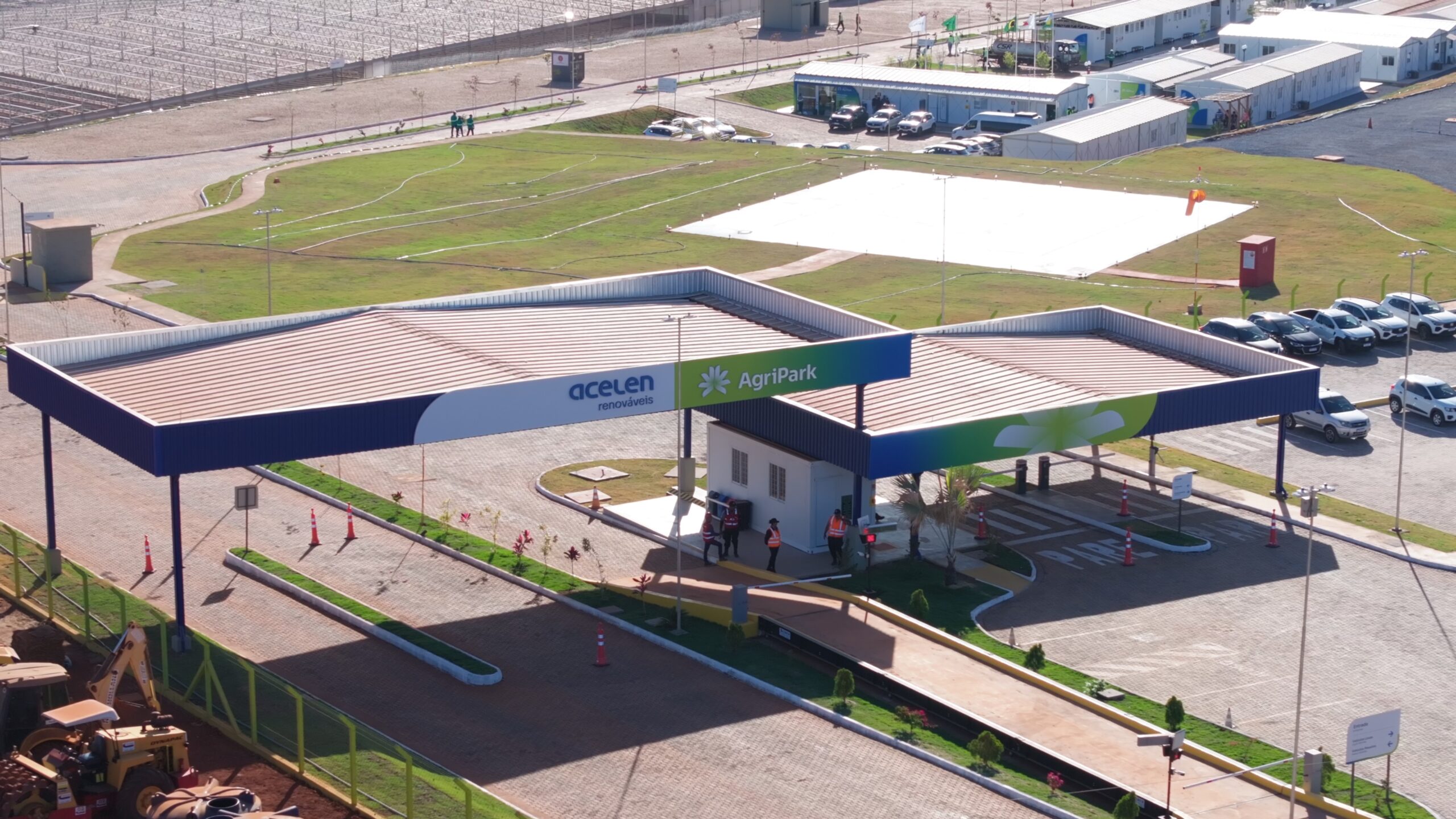
Robotized processes overcome one of the main challenges associated with the raw material and enable the production of seedlings on a commercial scale for Acelen Renewables’ US$3 billion project focused on the production of SAF and HVO
How can a native Brazilian plant—still underdeveloped as a commercial crop—be transformed into a raw material capable of supplying a new renewable fuels industry? This is one of the questions driving researchers, engineers, and specialists at Acelen Agripark, the world’s largest agro-industrial center designed for to macauba, which is celebrating its first year of operation in Montes Claros (state of Minas Gerais).
Developed by Acelen Renewables, an energy company owned by Mubadala Capital, Acelen Agripark was already operating—even before its official inauguration—facilities designed for transforming macauba into a viable crop on a commercial scale. In its first year of operation, the complex, located in Montes Claros (state of Minas Gerais), made progress on one of the species’ main historical challenges: studies conducted in partnership with the State University of Montes Claros (Unimontes) achieved germination rates exceeding 80%, compared to natural rates, which range between 3% and 5%. To accelerate the development of the crop and its future application in the production of renewable fuels, Acelen Agripark brings together, under one roof, a biofactory, a Research & Development (R&D) laboratory, a pilot plant, nurseries, and experimental areas, thus linking scientific research, seedling production, and macauba processing.
The result of a R$314 million investment—of which R$258 million was financed by the BNDES—Acelen Agripark brings together science, technology, and innovation in a single space to create solutions that span the entire macauba production chain, from genetic research and seedling production to the industrial processing of the fruit. More than just an agro-industrial innovation center, the complex embodies Acelen Renewables’ strategy of transforming a native Brazilian species into a new platform for the production of sustainable aviation fuel (SAF) and renewable diesel (HVO).
One of the main highlights of this first year is the biofactory, considered the technological heart of Acelen Agripark. In a 1,500-square-meter cleanroom facility, robotic processes have made it possible to overcome one of the macauba’s greatest historical challenges: the low and slow germination rate of its seeds. With the capacity to scarify up to 1.7 million seeds per month—at a rate of one seed per second—the biofactory has made it possible to produce seedlings on a commercial scale.
Another unique feature of the complex is LabNext, a laboratory responsible for research and development (R&D) and quality control. With the capacity to perform up to 160,000 analyses per year, 87 pieces of high-tech equipment, and 93 types of analysis, the facility monitors every phase of the production chain—from water, soil, and fruit to oil and effluents—ensuring standardization, traceability, and sustainability in all processes.
At the pilot plant, the company is advancing the industrial-scale processing of macauba through a fully automated facility designed to test and refine processes that will be used in the production of renewable fuels. The unit has the capacity to process up to two metric tons of fruit per hour and simultaneously operates four oil-extraction processes, which are essential for validating the technologies that will be applied on an industrial scale.
Technology is also integral to seedling production. The automated sowing line uses biodegradable seed tubes and traceability systems that allow for individual monitoring of plant development. The nursery, with a capacity to produce 10.5 million seedlings per year, controls all the environmental variables necessary to ensure the seedlings’ growth prior to field planting.
“Acelen Agripark’s first year confirms that innovation is the path to transforming macauba’s potential into a new production chain. More than just developing an agricultural crop, we are laying the groundwork for a project capable of driving regional development, strengthening the energy transition, and positioning Brazil as a leader in this market,” says Luiz de Mendonça, CEO of Acelen Renewables.
In addition to technological advancements, Acelen Agripark strengthens regional development. Currently, the complex employs 146 people, 37.7% of whom are women, and helps drive the local economy and the entire supply chain. The venture operates in partnership with universities, research centers, and national and international institutions.
The technologies developed at Acelen Agripark are also beginning to reach the field and support the expansion of macauba cultivation in degraded areas. Acelen Renewables’ project calls for the cultivation of 144,000 hectares of the species to supply the future production of 1 billion liters per year of SAF and HVO. According to a study by Fundação Getúlio Vargas (FGV), the initiative has the potential to inject US$40 billion into the Brazilian economy and generate up to 85,000 jobs throughout its implementation, expanding the renewable fuels production chain in the country.
About Acelen Renewables – Acelen Renewables is a renewable energy company owned by Mubadala Capital, a global alternative asset management firm headquartered in Abu Dhabi, United Arab Emirates, established to actively participate in the global energy transition. The company is independent from Acelen Refinaria de Mataripe and is developing an integrated ecosystem for the production of renewable fuels in Brazil, combining agricultural innovation, industrial technology, and the decarbonization of mobility and aviation. Learn more at acelenrenovaveis.com.